
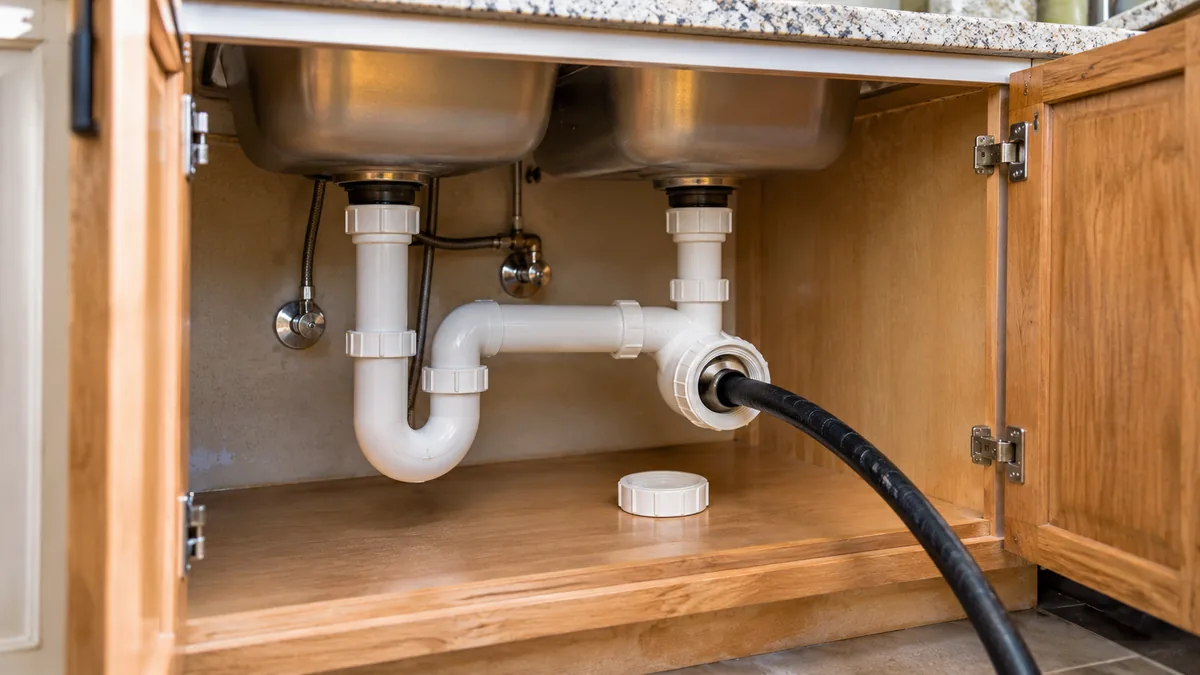
What is drain jetting?
Drain jetting is high-pressure water cleaning for the branch drains that run from sinks, tubs, washers and floor drains to the main line. A jetter with a thin hose and a small nozzle scours grease, soap scum and scale off the pipe walls, so water flows more freely instead of squeezing through a narrow opening.
Most household drain lines are 1.5 to 3 inches across, much smaller than a 4 or 6 inch main sewer. That is why drain jetting uses a lighter hose and a smaller nozzle than sewer line jetting. People also call it hydro jet drain cleaning or water jetting. The idea is the same: wash the pipe clean instead of poking a hole through the clog.
If one drain in your home keeps slowing down, call now and describe it. A local pro can tell you whether jetting is the right fit.
Which drains can be jetted?
Almost any drain with a way in can be jetted: kitchen sinks, laundry and utility sinks, washing machine standpipes, shower and tub drains, basement and garage floor drains, and outdoor area drains. Access is usually through a cleanout plug or by removing the trap under the fixture.
| Drain | Usual cause of repeat clogs | Is jetting a good fit? |
|---|---|---|
| Kitchen sink | Grease, food waste, coffee grounds | Yes, especially for repeat grease buildup |
| Laundry / washer standpipe | Lint, detergent residue | Yes, when it overflows during the drain cycle |
| Shower and tub | Hair and soap scum | Sometimes; a snake often works first |
| Basement or garage floor drain | Sand, silt, debris | Yes, flushing sediment is what jets do well |
| Outdoor area drain | Leaves, dirt, roots | Yes; roots may need a cutting nozzle |
Not sure what is in your line? Call and the pro will ask what you have seen.
Kitchen drain jetting: grease and food buildup
The kitchen line is where jetting earns its keep. Warm grease runs down the sink as a liquid, then cools and sticks to the pipe a few feet later. Each layer traps food bits, and the pipe slowly closes up until a snake can only open a small channel through the middle.
The U.S. EPA reports that grease is the most common cause of reported sewer blockages, and much of that grease starts in kitchen sinks. Jetting is designed to strip much of that hardened coating off the walls of the kitchen branch line and wash it down to the main drain. A plain snake leaves most of that coating behind, which is why the same sink often clogs again within weeks.
EPA also advises never pouring cooking oil or grease down a drain and limiting garbage disposal use, because disposals add fats and solids to the line. Those two habits do more to keep a kitchen drain clear after jetting than any product. If your kitchen sink is slow again, call now to book your service.
Why do drains keep clogging?
A drain that clogs over and over usually has something stuck to the pipe walls, not one object in the way. Snaking clears the symptom; the coating stays and catches new debris. Less often, the pipe itself is the problem: a sag, poor slope or a broken section that holds waste.
- Grease and soap coat the inside of kitchen and laundry lines
- Hair ties together with soap in shower and bathroom drains
- Scale from hard water narrows older metal pipes
- Sand and silt settle in floor and outdoor drains
- Pipe defects such as a sag (called a belly) or a cracked joint trap waste in one spot
If jetting does not keep a drain clear, a sewer camera inspection shows what is going on inside. Call and ask the pro whether a camera check makes sense for your drain.
Is drain jetting safe for my pipes?
For pipes in sound condition, yes. The pro matches the nozzle and pressure to the size and material of the drain, and household drain jetting uses far less force than municipal sewer cleaning. Very old, cracked or badly corroded pipes are checked first, because water can find a weak spot.
| Drain pipe inside the home | What the pro looks for | Usual approach |
|---|---|---|
| PVC or ABS plastic | Loose glue joints, sharp bends | Jet with a nozzle sized to the pipe |
| Galvanized steel | Rust closing the pipe from inside | Gentle jetting; heavy rust may mean replacement |
| Cast iron | Scale, thin or cracked walls | Camera first on old lines, then jet |
Plastic drains handle jetting well. Older galvanized steel and cast iron can be jetted, but heavy rust may mean the pipe is near the end of its life, and the pro may suggest a camera look first. The what is hydro jetting guide covers each pipe material in more detail. Have a question about your pipes? Call and ask before any work is booked.
How do you keep a drain clear after jetting?
Jetting removes the buildup, but the same habits will rebuild it. Keeping grease, wipes and hair out of the line is what makes the result last, and a short list of habits covers most homes.
- Wipe greasy pans with a paper towel before washing them
- Use a strainer in the kitchen sink and a hair catcher in the shower
- Run hot water for a minute after the dishwasher or sink is used heavily
- Never rinse coffee grounds or eggshells down the disposal
- Ask the pro how often your kitchen line should be checked if it has clogged before
If a drain slows again despite this, call and describe what changed.
Can you jet septic and drain field lines?
Sometimes, but it depends on how your system was built, and it is a different job from pumping the tank. The U.S. EPA describes a conventional drain field (also called a leach field) as a series of perforated pipes buried in the yard. Some of these lines have cleanouts that allow jetting; many do not.
EPA notes that fats, grease and solids, for example from a garbage disposal, can reach a septic system and clog the drain field. Jetting cannot help if the soil around the lines is saturated or the system has failed. Call, describe your septic setup and ask whether jetting the lines is an option before booking anything.
Commercial drain jetting
Restaurants, cafeterias, apartment buildings and offices put far more grease and waste down their drains than a single home. Their kitchen and floor drains are often jetted on a schedule so they never reach the point of a backup during business hours.
For grease-heavy food service lines, see commercial grease line jetting. If a drain backup has already reached the main line, the sewer backup and main line clog page explains what to do first. Business owners can call 24/7 to schedule hydro jetting.
Drain jetting near you
Searching for drain jetting near me? Local professionals offer it across the United States. Each city page covers local plumbing conditions such as older housing, hard water and soil.
Local pages: Jacksonville, FL · Austin, TX · San Jose, CA · Charlotte, NC · Columbus, OH · Indianapolis, IN · San Francisco, CA · Seattle, WA
Find your state or city on the areas we serve page, or simply call from wherever you are. Calls are answered 24/7.