
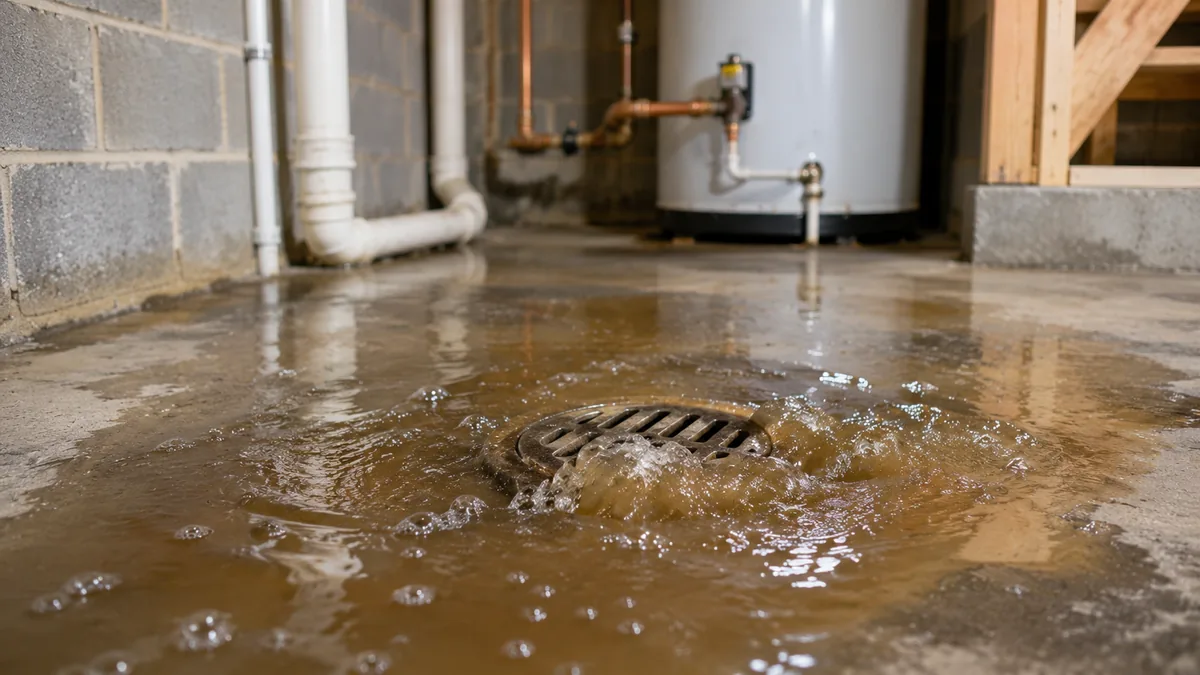
Is it the main line or just one drain?
If only one sink or tub is slow, the clog is usually in that fixture's branch line. If several drains are slow at once, or water comes up in a different fixture than the one you used, the main sewer line is blocked.
| What you see | Likely problem | What to do |
|---|---|---|
| One slow sink or shower | Branch drain clog | Drain cleaning or jetting |
| Toilet flush makes the tub gurgle or rise | Main line partly blocked | Stop water use, call |
| Water or sewage in the basement floor drain | Main line blocked | Stop water use, call now |
| Sewage seeping from the yard cleanout | Main line fully blocked | Keep people away, call now |
| Nothing drains anywhere | Main line or city sewer | Call a drain pro first |
Seeing any of the bottom four? Call now. Calls are answered 24/7.
What should you do right now?
First, stop using water anywhere in the building. Then keep children and pets away from any sewage, and get a drain and sewer pro to open the line. The City of San Diego also advises containing a spill at the cleanout with sandbags, dirt or cat litter and turning off the water if needed.
- Stop all water use: no flushing, showers, dishwasher or laundry.
- Keep people and pets away from backed-up water; sewage can carry germs.
- If sewage is coming out of the outdoor cleanout, contain it with dirt, sandbags or cat litter.
- Do not pour chemical drain openers into a backed-up main line.
- Call a local professional to clear the line and book your service.
EPA notes that sewer overflows can back up into homes, damage property and threaten public health, which is why a backup should be cleared quickly. Call now, calls answered 24/7.
Why does the main sewer line clog?
Most main line clogs come from what goes down the drains and what grows into the pipe. San Diego lists wipes, diapers, toilet paper and feminine products as common blockage causes, along with fats, oils and grease and tree roots.
- Wipes and paper: "flushable" wipes, paper towels and large amounts of toilet paper snag in the line
- Grease: cooking fats harden on the pipe walls and catch everything else
- Tree roots: they enter through small leaks and joints and form a net, see tree root removal
- A belly or broken pipe: a sag holds waste, and a break lets soil in
- Objects: toys and other items flushed by accident
Knowing the cause matters because it decides the fix. A camera check after the line is opened shows which one you are dealing with.
How is a main line clog cleared?
The pro opens the main cleanout, relieves the backup by opening a path through the clog, then cleans the line so it stays open. A camera inspection afterward shows what caused it and whether the pipe is damaged.
Opening the clog is often done with a cable machine. Cleaning the line properly is where sewer line jetting comes in: high-pressure water scours grease, sludge and roots off the walls instead of leaving them to cause the next backup. If the camera finds a break or a belly, the pro can explain repair options. Call to get information about the service and book a visit.
City sewer or your line: who is responsible?
In many cities, the owner is responsible for the sewer lateral from the building to the city main under the street. The City of San Diego says the entire lateral is the owner's private property, and Los Angeles County says owners must keep the lateral clear of debris such as roots, including the part under the sidewalk.
Cities usually step in only in narrow cases. In San Diego, for example, city crews respond only after a drain professional confirms the blockage is in the section under the street and the building has lost all sewer service. Every city sets its own policy, so ask your local sewer agency. For the work on your side, call and book your service.
How do you prevent another sewer backup?
Most backups can be prevented by keeping the wrong things out of the drains and keeping the lateral in good shape. San Diego points out that routine maintenance problems such as roots or grease buildup are the owner's responsibility, so prevention pays off.
- Flush only toilet paper, and not large wads of it
- Put cooking grease, butter and salad dressing in the trash, not the sink
- Have a camera check after a backup to find roots or damage
- Repair cracked or sagging sections the camera finds
- Know where your cleanout is so it can be reached quickly
Emergency sewer backup help near you
Emergency sewer backup help is available through local professionals across the country, and calls are answered 24/7. Each city page covers local sewer systems and common problems in that area.
Local pages: Wichita, KS · Cleveland, OH · New Orleans, LA · Henderson, NV · Honolulu, HI · Anaheim, CA · Orlando, FL · Lexington, KY
All states and cities are on the areas we serve page. If water is coming up now, call right away.