
What is Austin's Private Lateral Program?
It is Austin Water's way of handling the pipe between a building and the city's system. Austin Water calls that pipe a private lateral, or P-Lat, and investigates P-Lats for retail wastewater customers when there is an overflow or blockage on private property.
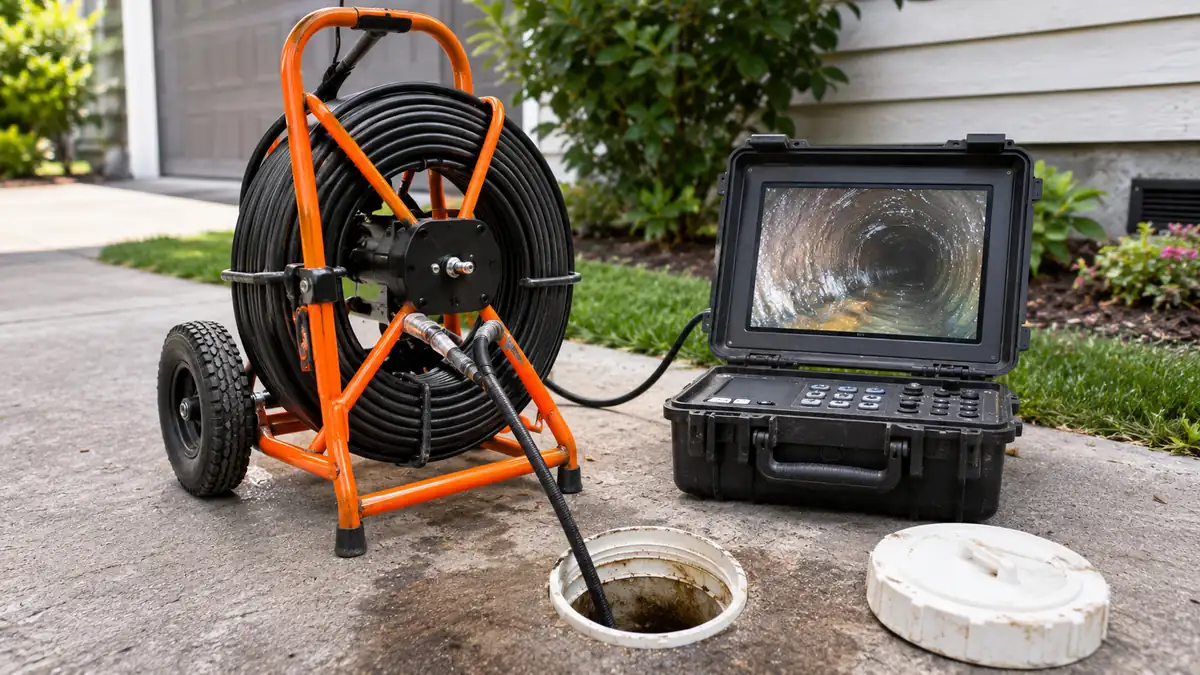
Owner duties are set out in Austin City Code Chapter 15-11, the Private Lateral Ordinance, which Austin Water points customers to for details. The city's stated aim is to reduce overflow incidents and avoid added costs for ratepayers. In practice, a clog in your lateral is yours to clear, and sewer line jetting with a camera inspection is how it is cleaned and checked. Call now and book your service.
Is there help with lateral repairs in Austin?
For some households, yes. Austin Housing runs a Private Lateral Grant Program that covers repair or replacement of these lines for eligible single-family and duplex customers who have received a notice from Austin Water about their lateral.
The program is aimed at households that meet city eligibility rules, so check the program page for the current terms. For everyone else, the practical step is the same: find out what is wrong with the line before choosing a fix, which starts with cleaning and a camera pass.
Who maintains which part of the line in Austin?
Austin Water calls the pipe from a building to the city system a private lateral and points owners to City Code Chapter 15-11 for their duties.
| Part of the line | Who maintains it | What it means when a line clogs |
|---|---|---|
| City wastewater collection system | Austin Water | The utility runs the public system |
| Private lateral from the building to the city system | Customer, per Chapter 15-11 | Austin Water investigates overflows and blockages on private property |
| Repair help for eligible households | Austin Housing grant program | Open to eligible single-family and duplex customers who received a notice |
Why do Austin laterals clog?
Roots, grease and open cleanouts are common contributors. The U.S. EPA names grease and tree roots as the primary causes of sewer blockages, and Austin's older central neighborhoods have mature trees growing close to aging lines.
Austin Water also stresses protecting the line from stormwater: a missing or cracked cleanout cap can let rain and debris into the system. Neighborhoods like Hyde Park, Clarksville and Travis Heights have older homes and tall trees, so roots are worth checking there. In newer areas like Mueller, grease and wipes can build up in any line. Tree root removal and drain jetting cover both.
Which hydro jetting services are available in Austin?
All seven services are available across Austin for homes, apartments, offices and restaurants.
- Sewer line jetting for the full private lateral
- Sewer camera inspection for older homes and before purchases
- Tree root removal for older central neighborhoods
- Drain jetting for kitchen and laundry lines
- Commercial grease line jetting for restaurants and bars
- Sewer backup help for urgent clogs
- Storm drain jetting for lots and apartment communities
Neighborhoods and nearby cities
Calls come from across Austin, including Hyde Park, Zilker, East Austin, Mueller, Clarksville, Bouldin Creek, Travis Heights, Tarrytown, Circle C and Windsor Park.
Nearby local pages cover hydro jetting in San Antonio and Houston. Help is also available in Killeen, Round Rock, Georgetown, Temple, Leander, Cedar Park, San Marcos, Kyle, Pflugerville, Hutto, Copperas Cove, Harker Heights, Belton, Manor and Lakeway. See the Texas page for every city we cover.