
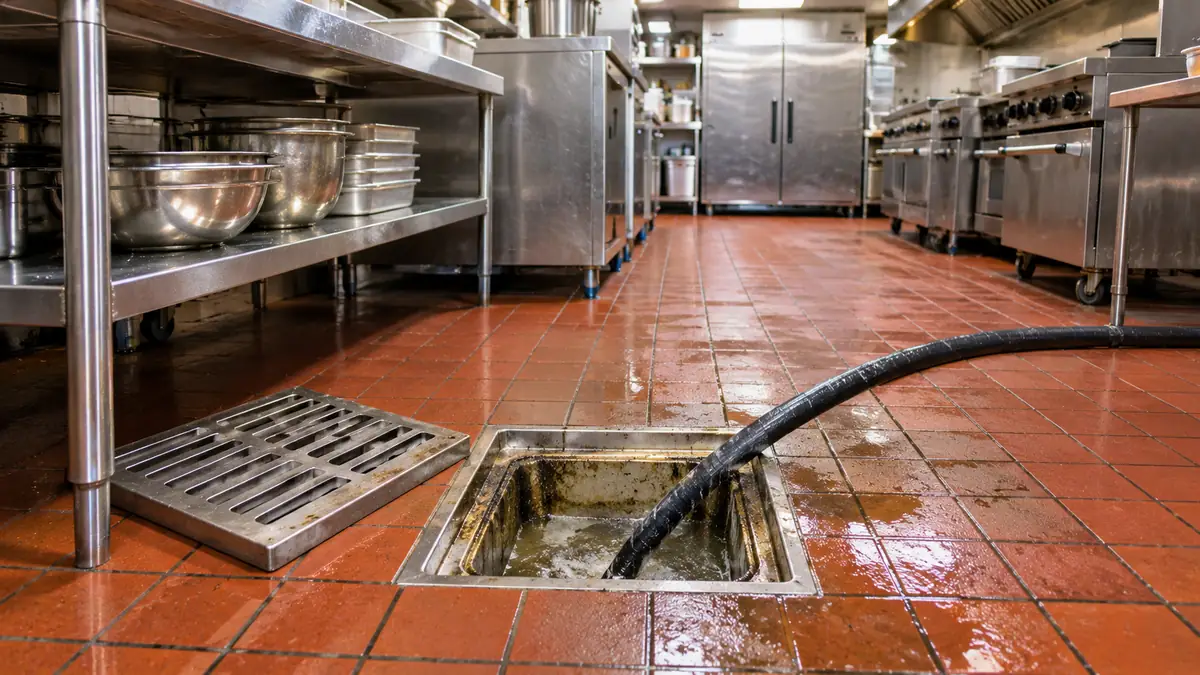
What is commercial hydro jetting?
Commercial hydro jetting cleans the drain and sewer lines of businesses with a high-pressure jetter, usually larger than residential equipment. In restaurants it targets the grease that coats kitchen lines; in other buildings it clears soap, sludge and sediment from heavily used pipes.
People search for it as commercial drain jetting, commercial sewer jetting, grease line jetting or restaurant hydro jetting. The goal is the same: keep business lines flowing so a backup never shuts down a kitchen or floods a floor. If your business has a slow or backing-up line, call now to talk to a local commercial jetting pro and book your service.
Why do restaurant grease lines clog?
Warm fats, oils and grease go down kitchen drains as liquid, then cool and harden on the pipe walls. The U.S. EPA reports that grease from restaurants, homes and industry is the most common cause of reported sewer blockages, because it solidifies and reduces the pipe's capacity.
Kitchens create grease all day: fryer oil, pan scrapings, dish water and floor washing. Even with a grease trap, the lines between the sinks and the trap collect a coating that a snake only punches through. Jetting is designed to scour that coating off the walls, and the pro manages the loosened material based on how your system is set up. Call and ask whether your lines are due for a cleaning.
Grease trap pumping vs grease line jetting: what is the difference?
They are separate jobs that work together. Pumping removes the grease that the trap or interceptor has caught. Jetting cleans the grease out of the pipes before and after the trap. Skipping either one tends to cause backups.
| Job | What it cleans | Why it matters |
|---|---|---|
| Grease trap or interceptor pumping | The tank that captures grease | A full trap lets grease pass into the sewer |
| Grease line jetting | Kitchen lines from sinks and floor drains, before and after the trap | Coated lines back up even when the trap is empty |
| Camera inspection | A video check of the lines | Shows buildup speed and pipe damage |
This site connects you with pros for line jetting and camera work. For trap pumping, ask on the call what they handle in your area.
Which businesses use commercial drain and sewer jetting?
Any building where many people use the plumbing, or where the waste is heavy, benefits from scheduled jetting. Restaurants lead the list, but they are far from the only ones.
- Restaurants, bars, cafeterias and food trucks with commissaries: grease and food waste
- Apartment and condo buildings: shared stacks and main lines carrying many households' waste
- Hotels and nursing homes: high use, laundry lint, wipes
- Schools and hospitals: heavy traffic, kitchens and floor drains
- Food processing and breweries: fats, solids, sediment
- Car washes and garages: sand, grit and mud in trench drains
Searching for commercial drain jetting near me? Call now. A local pro can explain how jetting fits your building and book a visit.
How often should commercial lines be jetted?
The right schedule depends on how much grease or debris the business produces. A busy fryer kitchen usually needs more frequent cleaning than a coffee shop. The practical way to set a schedule is to jet, inspect, and see how fast buildup returns.
EPA points out that sewer agencies may target or prioritize cleaning of their own lines based on grease discharges. Businesses can do the same on their side: once the buildup rate is known, regular jetting helps keep lines open and lowers the chance of a failure. The pro can suggest a schedule after seeing your lines.
How can a business cut grease buildup between cleanings?
The U.S. EPA describes two main tools for food service: best management practices that keep grease out of drains, and interceptor or collector devices that capture it before the sewer. Using both slows how fast lines coat up.
- Collect used cooking oil (yellow grease) for pickup instead of pouring it down a drain, as EPA describes
- Scrape plates and pans into the trash before washing
- Use sink strainers and keep floor drain baskets in place
- Keep the grease trap or interceptor on its pumping schedule
- Train staff on what never goes down the drain
When lines still slow down, call and book a jetting visit before a backup hits during service.
Commercial jetting near you
Commercial hydro jetting is available through local professionals nationwide, with day, night and weekend scheduling in many areas. Each city page covers local conditions such as older buildings and sewer systems.
Local pages: Long Beach, CA · Oakland, CA · Minneapolis, MN · Bakersfield, CA · Tulsa, OK · Tampa, FL · Aurora, CO · Arlington, TX
See all states and cities on the areas we serve page. Calls are answered 24/7.