
What does SFPUC expect from San Francisco owners?
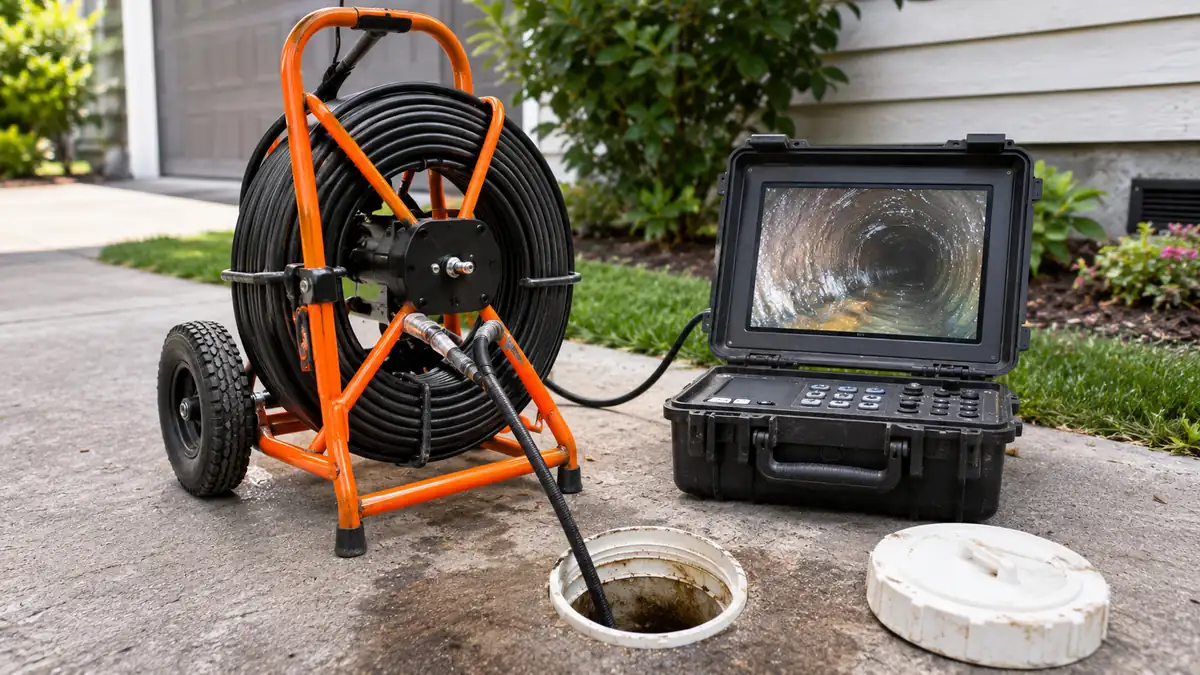
SFPUC splits the private sewer lateral into two parts and puts the upkeep of both on the owner. It describes the upper lateral, from the building toward the curb, as an extension of your home and fully your responsibility, and it asks owners to maintain the lower lateral too, including clearing and jetting it and inspecting it by CCTV.
If the pipe is found in bad condition, SFPUC says owners must repair and replace it according to San Francisco plumbing codes, and for the lower lateral SFPUC handles repair or replacement under most circumstances when its inspection finds the need. In everyday terms, that means keeping the line flowing is on you, and regular sewer line jetting with a camera inspection is exactly the kind of upkeep SFPUC describes. Call now and book your service.
How does rain affect San Francisco sewer lines?
In most of San Francisco, rainwater and wastewater share the same sewer system. SFPUC explains that stormwater enters through roof drains on buildings and the thousands of catch basins along the street, so flows in the system rise during storms.
When a lateral is already narrowed by grease or roots, it has less room to drain while the system is busy, and the lowest fixtures in a garage-level unit or basement feel it first. SFPUC publishes guidance on backwater valves, devices that stop sewage from flowing back into a building. Keeping the lateral clear is the first step; ask a local pro whether a valve suits your building.
Who maintains which part of the line in San Francisco?
SFPUC splits the private lateral into an upper and a lower part, and asks owners to look after both.
| Piece of the system | Responsible party | Practical meaning for a backup |
|---|---|---|
| Sewer main | SFPUC | The utility owns and runs the main |
| Upper lateral from the building toward the curb | Property owner, fully | SFPUC calls it an extension of your home |
| Lower lateral from the curb to the main | Owner maintains it; SFPUC repairs structural defects | Owners are asked to clear, jet and inspect it by CCTV |
Which hydro jetting services do San Francisco properties use?
All seven services are available. Lateral jetting and camera inspections lead for houses and flats, while restaurants and apartment buildings rely on scheduled grease and drain line cleaning.
- Sewer line jetting: upper and lower lateral cleaning, as SFPUC describes
- Sewer camera inspection: CCTV checks of lateral condition
- Tree root removal: for older clay laterals under street trees
- Drain jetting: kitchen and laundry lines in flats and condos
- Commercial grease line jetting: restaurants, cafes and hotels
- Sewer backup help: urgent clearing of garage and basement drains
- Storm drain jetting: private catch basins and area drains on larger sites
Neighborhoods and nearby cities
Calls come from across the city, including the Mission, Noe Valley, the Sunset, the Richmond, SoMa, Bernal Heights, Potrero Hill, Pacific Heights, the Excelsior and Bayview.
Across the bay and down the peninsula, local pages cover hydro jetting in Oakland, San Jose and Stockton. Help is also available in Santa Rosa, Rohnert Park and Windsor to the north. The California page lists every city we cover.
How can San Francisco owners keep laterals clear?
SFPUC's own advice centers on what goes down the drain: only human waste and toilet paper in toilets, and nothing else. Adding regular inspection and cleaning covers most of what an owner can do.
- Flush only toilet paper; keep wipes and paper towels out
- Put cooking grease in the trash
- Have the lateral inspected by camera, especially in older buildings
- Jet the line when buildup or roots are found
- Ask about a backwater valve for low fixtures
When drains start slowing down, call to get information about the service and book a visit.