
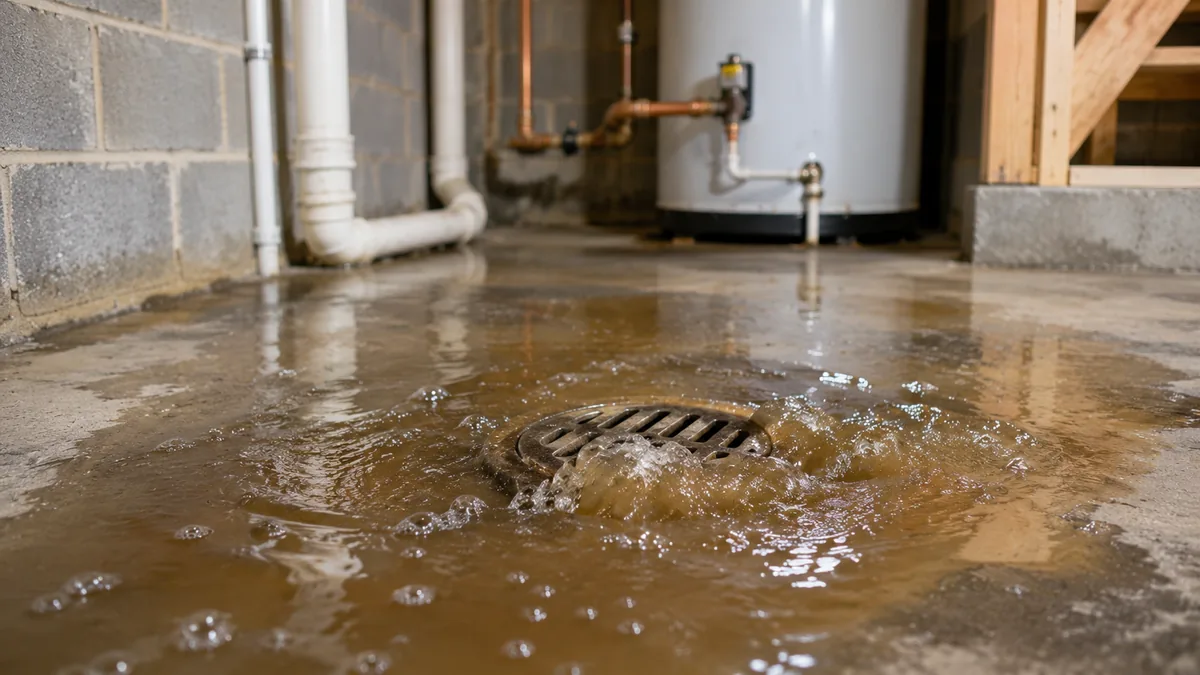
How do you tell if a Houston sewer backup is your line or the city's?
Check the cleanout at the street. Houston Public Works says that if sewer water is standing by that pipe, the problem may be in the city's line and you should call 311. If there is no sewage standing there, it says the blockage is on your private line and you should contact a plumber right away.
The city explains that cleanouts mark the limits of its public collection system, and they are typically white plastic pipes with a threaded or push-on cap found along public spaces. That simple check saves time on a bad night. If the cleanout is dry, the next step is opening and cleaning your own line, which is where sewer line jetting and a camera inspection come in. Call now and book your service.
Why do Houston sewer lines clog?
Grease and wipes are a major cause. Houston Public Works reports that 70% of the city's sewer overflows are caused by clogs from fats, oils and grease poured down the drain and wipes flushed down toilets, and that Houston has hundreds of sewer overflows each year.
Houston's food scene makes grease a daily load, and homes add their own. Wipes labeled flushable do not break up like toilet paper, so they catch on rough spots and grease and form a mat. Soil plays a part too: Texas A&M AgriLife explains that clay swells when wet and shrinks when dry, and that movement can stress foundations and, in turn, buried pipe. Older laterals can shift and crack, and clay and cast iron are the materials often found in older homes.
Who maintains which part of the line in Houston?
Houston Public Works treats the cleanout as the limit of the city's system, so the owner handles the private line behind it. The table shows how the pieces line up.
| Part of the line | Who maintains it | What it means when a line clogs |
|---|---|---|
| City sewer main and the street cleanout | City of Houston | Sewage standing at the street cleanout points to the city: call 311 |
| Private line from the cleanout to the house | Property owner | A dry cleanout points to a blockage here; a plumber or drain pro clears it |
| Kitchen and bathroom drains inside the home | Property owner | Grease and wipes are a major cause; jetting cleans the pipe walls |
Which hydro jetting services do Houston homes and businesses use?
All seven services are available in Houston. Grease-related calls from kitchens and homes are frequent, as are backups tied to wipes and older lines.
- Drain jetting: kitchen and laundry lines that clog again after snaking
- Sewer line jetting: full cleaning of the private line to the cleanout and beyond
- Commercial grease line jetting: restaurants, hotels and food service in Midtown, Downtown and the Galleria
- Sewer camera inspection: shows sags, cracks and roots in older lines
- Sewer backup help: urgent clearing when the cleanout is dry and water is rising
- Tree root removal: older lines near mature trees
- Storm drain jetting: private catch basins and lots, valuable in a rain-heavy city
Is a camera inspection worth it in Houston?
For older homes, often yes. Because clay soil moves, a line can develop a low spot that holds water and waste. A camera shows that sag, along with cracks and roots, before you decide between cleaning and repair.
A sag, sometimes called a belly, keeps causing clogs even after a line is jetted, because debris settles in the same place. Seeing it on camera helps you judge how much jetting alone can do there. Ask for a camera check when you call.
Neighborhoods and nearby cities
Calls come from across Houston, including the Heights, Montrose, Midtown, the Museum District, Rice Village, the Galleria, Memorial, the East End, Third Ward, Clear Lake and Sharpstown.
Houston sits far from other Texas metros, so the nearest city page is hydro jetting in Austin. Help is also available in Pasadena, Pearland, League City, Conroe, Sugar Land, Baytown, Missouri City, Fulshear, Texas City, Galveston, Rosenberg, Friendswood, La Porte, Deer Park and Alvin. The Texas page lists every city we cover in the state.