
What makes sewer lines in Washington, DC clog?
Three local factors stand out in the District: an older central city with older pipes, a large combined sewer area that carries both rain and wastewater, and a growing tree canopy whose roots look for water in aging laterals. Grease from homes and a dense restaurant scene adds to the load.
DC Water reports that about two-thirds of the District is served by separate sewers and the remaining one-third by combined sewers, located mainly in the older central part of the city. Older neighborhoods also tend to have older laterals, the private lines that run from each building to the public main. Joints in clay and cast iron pipe from earlier decades are where roots and grease build up first.
Trees are part of DC's identity, and the District Department of Transportation is planting between 6,000 and 8,000 trees a year across all eight wards, working to grow tree canopy from 37% to 40% by 2032. The bigger factor for sewer lines is the combination of mature trees and older laterals with joints that roots can enter, so homeowners with older pipes should watch for root problems. If your drains slow down every spring, call and talk to a local pro.
What does the combined sewer area mean for your home?
In the combined sewer area, the same public pipes carry rainwater and wastewater. During heavy storms that flow rises quickly, so a lateral that is already narrowed by grease or roots has less room to drain, and the lowest fixtures in a basement are the first to show trouble.
DC Water's Clean Rivers tunnels are designed to capture much of that storm flow, but a clear private lateral is still the owner's part of the system. Keeping the line clean with sewer line jetting and having low drains checked are practical steps. DC Water also runs a backwater valve program for owners with documented storm backups. Ask a local pro whether your basement drains need attention, and book your service.
Who handles a sewer backup in DC?
DC Water handles its public main, and the property owner handles the sewer lateral serving the building. DC Water's own rule is that if its main is clear, the owner must hire a registered master plumber to clear the lateral, and cleanup is most often the owner's responsibility. Ask the professional you speak with whether they meet DC's requirements.
If the blockage turns out to be in the public portion of the lateral, the plumber files a report with DC Water, and DC Water assists if the plumber cannot clear it. In practice, that makes a fast call to a drain and sewer pro the key step. See sewer backup and main line clogs for what to do while you wait, then call now. Calls answered 24/7.
Who maintains which part of the line in Washington, DC?
DC Water maintains its public main, and the owner is responsible for the sewer lateral serving the property.
| Piece of the system | Responsible party | Practical meaning for a backup |
|---|---|---|
| Public sewer main | DC Water | Report a backup to DC Water's emergency line first |
| Sewer lateral serving the property | Property owner, using a registered master plumber | Required when DC Water finds its main clear |
| Public portion of the lateral | Plumber reports to DC Water | If the plumber cannot clear it, DC Water assists |
Which hydro jetting services are available in Washington, DC?
All seven hydro jetting services are available to District homes and businesses. Each one fits a different local problem, from rowhouse laterals to downtown restaurant lines and the storm inlets in commercial lots.
- Sewer line jetting: cleans the lateral from rowhouse or detached home to the public main, a common need in older neighborhoods.
- Drain jetting: for kitchen and laundry lines in condos and townhouses that clog again soon after snaking.
- Tree root removal: cuts roots out of clay and cast iron laterals near street trees.
- Sewer camera inspection: shows the condition of an older lateral, useful before buying a District home or after a backup.
- Commercial grease line jetting: keeps restaurant lines open in busy dining areas, often booked after hours.
- Sewer backup and main line clog help: urgent clearing when water rises in a basement floor drain.
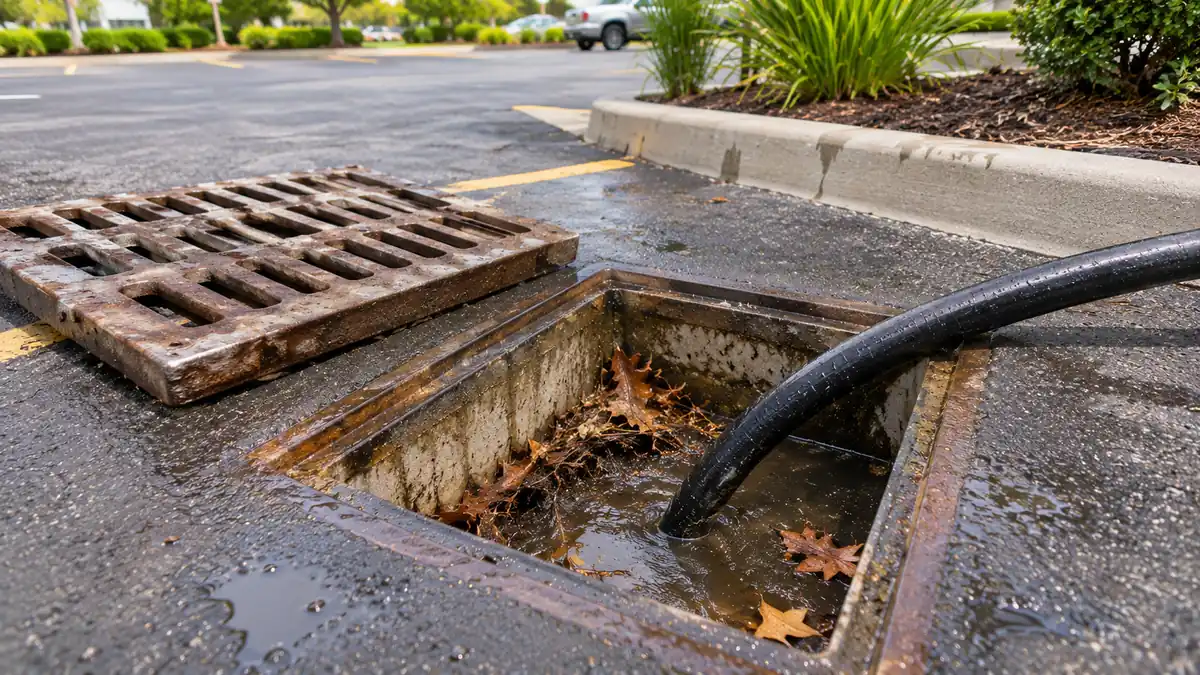
- Storm drain jetting: clears catch basins and storm lines on private lots, garages and campuses.
Neighborhoods and nearby areas
Calls come in from every ward, including older rowhouse areas and newer development alike. Neighborhoods include Capitol Hill, Georgetown, Columbia Heights, Petworth, Shaw, Adams Morgan, Brookland, Navy Yard, Anacostia and Tenleytown.
Outside the District, nearby city pages cover local conditions in hydro jetting in Baltimore and Richmond, Virginia, and further up the coast Wilmington and Philadelphia. Wherever you are in the region, call and a local professional will explain the service and book a visit.
How can DC homeowners prevent the next backup?
The steps that help most in the District are the same ones that help everywhere, with extra attention to roots and storms: keep grease out, watch for slow drains in spring and before storm season, and know where your cleanout is.
- Put cooking grease in the trash, not the sink
- Have an older clay or cast iron lateral checked with a camera
- Clear roots before the growing season if they have been a problem
- Ask about low basement drains and storm-related backups
- Flush only toilet paper, especially in older homes
When you are ready, call to get information about the service and book your visit.